
 Building Configurator
 Request a Quote

Article: Built to Last — Understanding the Longevity of PVC Fabric Buildings
Built to Last — Understanding the Longevity of PVC Fabric Buildings
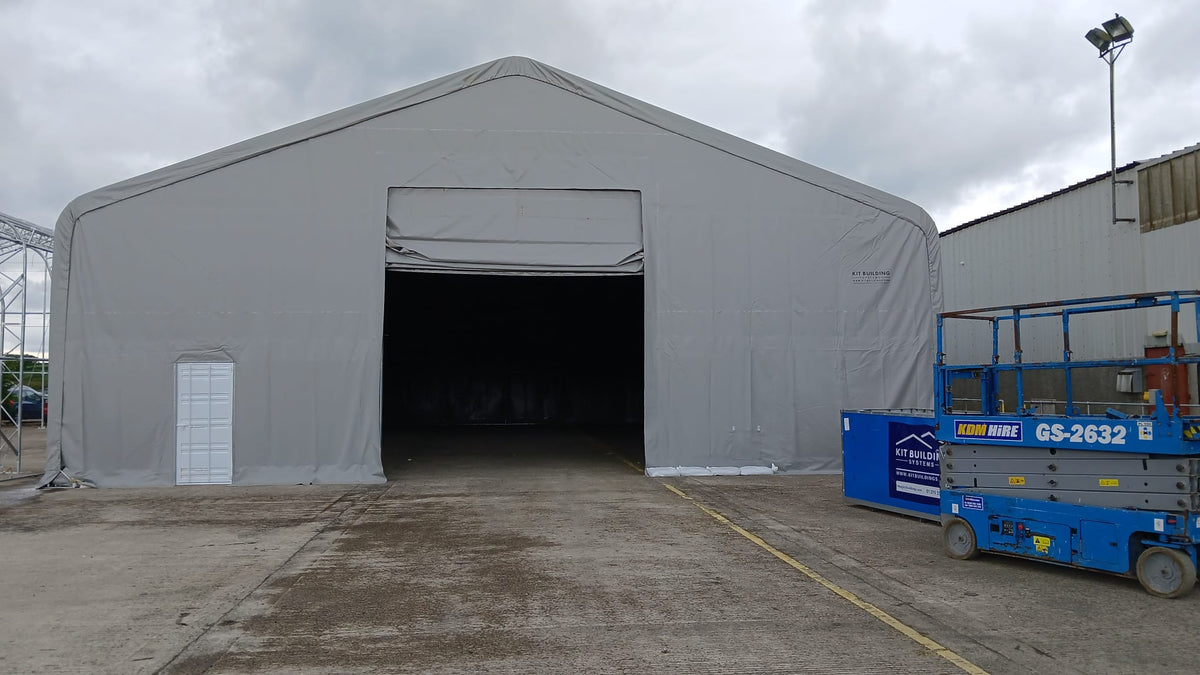
When businesses invest in a building, longevity matters. Nobody wants to budget for a structure today and find themselves facing a full replacement cost in a few years. With PVC fabric buildings, the longevity story is a good one — but it's worth understanding how it works, because it's slightly different from how people often think about building lifespan.
The short version: the steel frame at the heart of a Kit Buildings fabric structure is built to last indefinitely. The PVC cover has a lifespan of around 10 years. And when the cover reaches the end of its life, replacing it costs a fraction of what the original building cost — giving you effectively a new building on an existing frame, at a fraction of the price.
The Frame: The Foundation of Long-Term Value
Every Kit Buildings fabric building — single truss or double truss — is built on a hot-dip galvanised steel frame. Galvanisation is a proven process for protecting steel against corrosion, and when properly maintained, a galvanised steel frame will last for decades. The frame is the structural backbone of the building, and it doesn't degrade in the way that organic materials like timber do over time.
This is a fundamentally different proposition from a timber-framed building, where the structure itself is susceptible to rot, pest damage, and moisture ingress over time. With a Kit Buildings fabric structure, the long-term integrity of the frame is not in question. It's the cover — not the structure — that has a defined service life.
The PVC Cover: 10 Years of Reliable Performance
The PVC cover on a Kit Buildings fabric building is UV-stabilised and designed for sustained outdoor use. Under normal conditions and with reasonable maintenance, you can expect a service life of around 10 years from the cover before replacement becomes necessary.
Ten years is a meaningful working life for what is, in building material terms, a relatively lightweight and cost-effective component. Over that period the cover handles rain, UV exposure, temperature variation, and the day-to-day demands of agricultural or commercial use. It's not a short-term solution — it's a practical, durable cover that does its job reliably across a significant portion of a building's operational life.
Factors that influence how well the cover performs over time include the quality of installation, the conditions on site, and the level of maintenance applied. Keeping the cover clean, checking fixings periodically, and addressing any minor damage promptly will all help maximise the service life and keep the building performing at its best throughout.
Replacement Covers: A New Building for a Fraction of the Cost
Here's where the longevity story becomes genuinely compelling. When the PVC cover reaches the end of its service life after around 10 years, the solution isn't to replace the building — it's to replace the cover.
The steel frame is still standing, still sound, and still fully functional. What you need is a new PVC cover fitted to the existing frame — and that process costs a fraction of what the original building investment was. You're not starting from scratch. You're refreshing the part of the building that has a defined service life while retaining the structural asset you've already invested in.
This is a very different financial profile from traditional construction, where a building reaching the end of its useful life requires significant capital to replace in full. With a Kit Buildings fabric structure, the ongoing cost of keeping the building operational is low and predictable — a planned replacement of the cover at around the 10-year mark, rather than an unpredictable full replacement further down the line.
For businesses thinking about the total cost of ownership over a 20 or 30-year period, this matters. A fabric building with one cover replacement over two decades still represents significant long-term value compared to the alternatives.
Planning for Longevity from Day One
The best approach to maximising the lifespan of a PVC fabric building is to think about maintenance from the day it goes up, not just when problems start to appear.
Keeping the cover clean prevents the build-up of organic material that can degrade the PVC over time. Ensuring fixings and tensioning are checked periodically keeps the cover performing as designed. And if minor damage does occur — a small tear, a worn fixing point — addressing it promptly prevents it from developing into something more significant.
When the time does come to replace the cover, Kit Buildings can supply replacement PVC covers for existing frames. It's a straightforward process that keeps the building in service without the cost or disruption of a full replacement.
The Right Building for the Right Application
PVC fabric buildings are an excellent solution for a wide range of agricultural, commercial, and industrial storage applications. They're cost-effective, fast to deliver and install, relocatable, and — with the right maintenance approach — genuinely long-lasting when you account for the full frame and cover lifecycle together.
If you're weighing up whether a fabric building is right for your requirement, or you have an existing fabric structure approaching the 10-year mark and want to understand your replacement cover options, the Kit Buildings team is happy to help.