


 Building Configurator
 Request a Quote

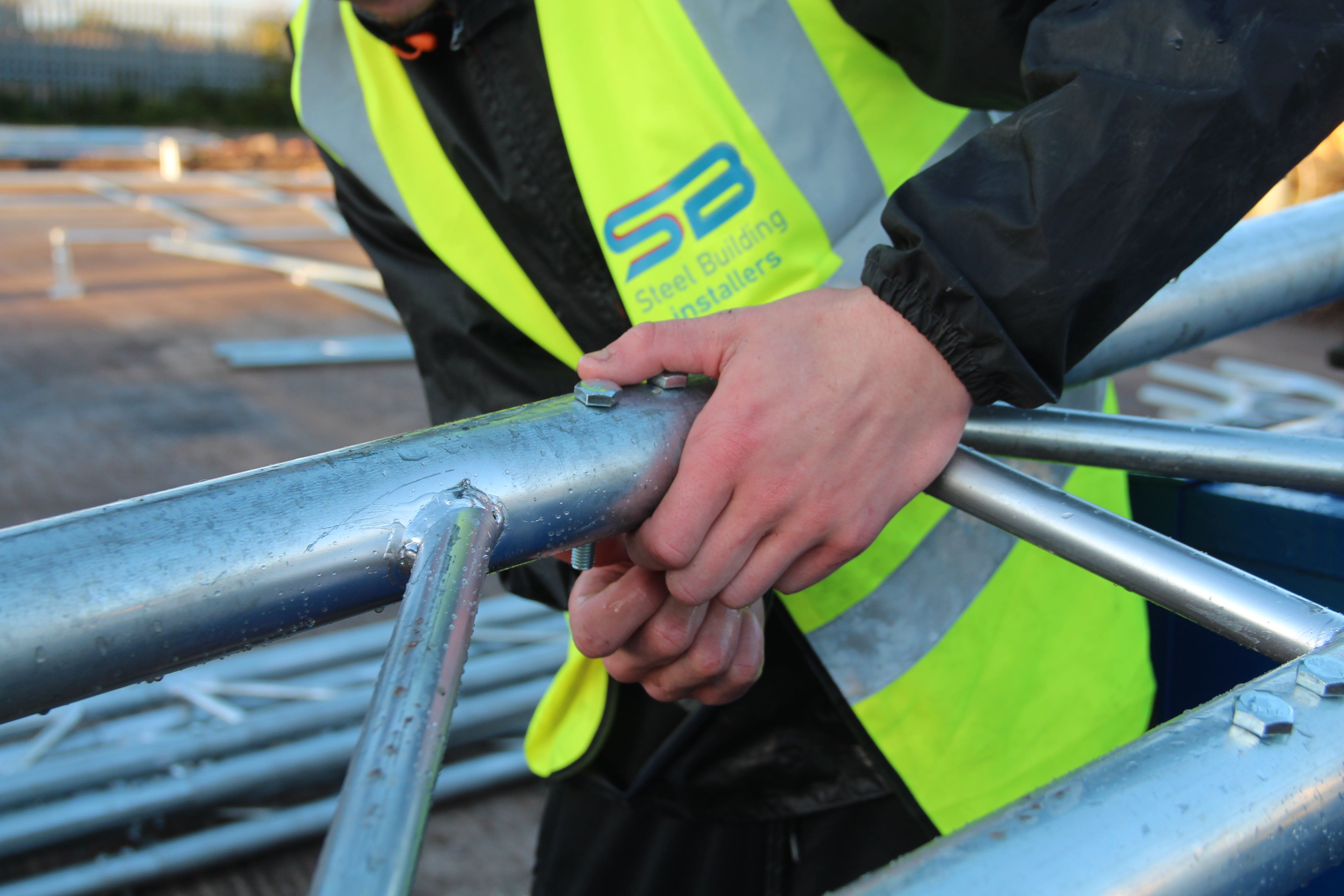
Service & Installation
PROFESSIONAL INSTALLATION SERVICES
Kit Buildings works with a network of experienced, pre-approved installation contractors across most regions of Canada. To receive details of recommended contractors in your area, please contact us with your project location and basic site information.
Our installation partners are highly experienced in the assembly of steel frame buildings, container canopy systems, and temporary structures. They will be pleased to provide a detailed quotation and confirm availability based on your specific project requirements.
Navigation
REQUIRED PROJECT INFORMATION
To assist with accurate pricing and scheduling, please prepare the following information:
- Project location – Full site address or nearest town/city
- Site surface conditions – Concrete slab, asphalt, compacted stone, soil, etc.
(Groundworks services can be arranged upon request.) - Available plant equipment – Forklift, telehandler, scissor lift, crane, or other lifting equipment on-site
- Structure specification – Size, leg height, container configuration, and cover type
- Project drawings – Structural drawings will be supplied by Kit Buildings as part of your quotation package
Providing this information in advance allows our installation teams to deliver accurate cost estimates and efficient scheduling for your project.
DIY INSTALLATIONS
To avoid damage resulting from a faulty installation, we recommend that a professional be hired to install your shelter.
If you choose to do it yourself, before assembly, read the complete Assembly Manual provided with your shelter, then match the parts to the instructions. Once done follow all the installation instructions.
If you experience installation problems, please email info@kitbuildings.com and include:
- Name purchased under
- Phone number
- Shelter size or model
- Detailed explanation
- Photos
We will respond as soon as we are able. We cannot resolve installation issues by phone.
Improper assembly or maintenance may invalidate the warranty and cause unnecessary and costly mistakes.
Things that can cause a shelter to fail and result in voiding the warranty.
- A poor foundation and/or improper installation of the base plates
- Misalignment of shelter frame. The frame must be square, and all tubes must be in alignment with others.
- Not finishing the install
- Bolts, tension wires not firmed snugged
- Tarps installed too loosely
- Lack of biannual inspections and the tightening of tension wires, bolts, and straps.
Warranty: Customer Installations
- All customer installed shelters have a warranty limited to failure of parts.
- Shelters are not fully covered under the warranty during extreme weather events. The customer must be proactive in ensuring neither wind or snow buildup causes a structure failure.
- It is necessary to tighten the roof fabric enough to avoid “hammocks” on the roof. Also re-tighten once or twice again after a few months of use. This is important when assembly is done in cold weather (autumn and winter) because the fabric is stiff. When the warm weather returns, it will make the fabric “slack” again and will need to be re-tightened before the next winter. Failure to do semi-annual inspections of the shelter and tighten any loose straps or tension wires may cause issues.
The installation of a shelter is critical to how it will stand up to heavy winds and snow. If the manufacturer’s installation guidelines are not adhered to, failure of the shelter could result. If in doubt about any of the installation processes, please email info@kitbuildings.com.
PARTS
We have identified all the components with the part number as indicated in the Assembly Manual Parts List. Please refer to the part numbers and drawings to ensure problem free assembly. Note that the drawings of the parts are for installation reference only and may be different than the actual parts.
If you have a parts related issue, please email info@kitbuildings.com and include:
- Name purchased under
- Phone number
- Shelter size or model
- Part number
- Detailed explanation
We will respond as soon as we are able. We can not resolve parts issues by phone.
SITE PREPARATION
FOUNDATION OPTIONS
Selecting the right foundation is based upon terrain, availability and whether the building is temporary or designed to be a permanent structure. Each arch comes with two anchor plates and each anchor plate is pinned down at four anchor points. We recommend that anchor plates be placed onto concrete with concrete lock blocks being a common method.
Foundation methods:
- concrete lock blocks
- concrete slab
- asphalt [special anchors required]
- continuous concrete footers
- steel I beam
- heavy timbers
- concrete pier footers
- bare ground, duckbill ground anchors, screw piles
INSULATING YOUR SHELTER
Kit Buildings recommends insulating your shelter with Reflectix double sided insulation.
Reflectix is easy to install, fiber free and does not require protective clothing or respirators to install. The product has a Class A / Class 1 fire rating and is nontoxic / non-carcinogenic. It is durable and lightweight and is not affected by moisture or humidity.
There are many benefits to insulating your shelter with Reflectix, including:
- Reflects 96% of radiant energy Inhibits condensation
- Resists growth of fungi, mold, and mildew
- Does not promote nesting of insects or rodents
- Lowers heating and cooling costs year-round
- Vapor and radon retarder
For detailed specifications and roll sizes please refer to the Reflectix specifications document.
For information about purchasing this product for your shelter, contact info@kitbuildings.com
WIND & SNOW CARE
Each shelter has a different wind and snow rating depending upon the style and size of the shelter. Owners are responsible for removing snow immediately if it does not slide off by itself.
All shelters are designed to keep the elements out under most weather conditions, but unlike conventional construction these are fabric buildings and require that some precautions and common sense be used to protect your investment whenever heavy winds or heavy snowfalls are anticipated.
High Winds
- Ensure the shelter is vented. Problems can occur if wind finds a way in but has no outlet. The best way to vent the shelter is to open the doors at each end of the shelter as this relieves pressure on the windward side and keeps the inside from ballooning.
- Ensure that all ratchet straps and turnbuckles and tension wires are tight. During high wind gusts of 70 KPH and higher, keep checking the tension and tightening as required as occasionally the tarp vibration will loosen tension wires. Remove the cover during a hurricane. The trusses must be installed securely before the fabric is installed
Snow
- These shelters will hold a reasonable snow load, and the roof slopes are designed to shed snow, but during heavy wet snow conditions every effort should be made to check the shelter to ensure large accumulations are not building up.
- Remove snow build up on the side walls due to snow sliding off the roof. This to relieve pressure on the side walls frame and fabric
- Warming and freezing conditions. It is best to remove any snow build up to avoid situations where the snow partially melts, then freezes. This will add extra weight and if a heavy snowfall occurs overnight, can cause major issues. When daytime melting and overnight freezing occurs, gentle prodding of the roof fabric with a blunt instrument should result in the build up sliding off.