

 Building Configurator
 Request a Quote

Natural Ventilation in Agricultural Shelters
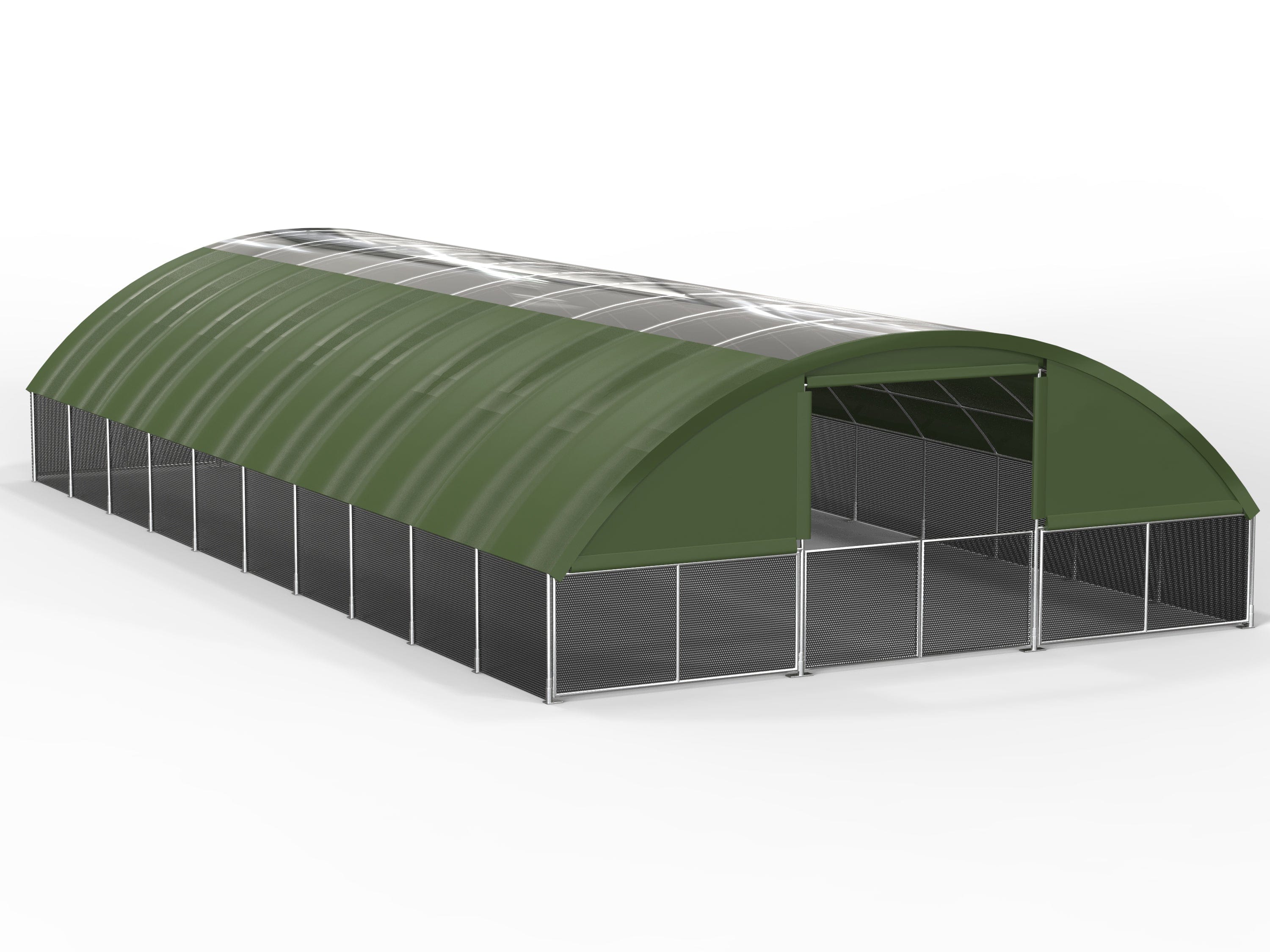
Natural ventilation is an important part of agricultural shelter design. Good airflow can help reduce moisture, improve animal comfort, limit stale air, and support healthier conditions inside farm buildings and livestock shelters.
One useful ventilation principle is the stack effect. This happens when warm air rises and exits through higher openings, helping draw cooler fresh air into the shelter. When planned correctly, this natural airflow can support better internal conditions without relying only on mechanical ventilation.
For farms comparing shelter types, see our agricultural building options.
What Is the Stack Effect?
The stack effect is a natural airflow process caused by temperature and pressure differences. Warm air rises inside the shelter and escapes through upper openings. As that air leaves, cooler air is drawn in from lower openings, creating continuous air movement.
In agricultural shelters, this can help remove heat, moisture, odours, and stale air while bringing in fresher air from outside.
Why Ventilation Matters in Agricultural Shelters
Ventilation is important for both animal comfort and building performance. Poor airflow can lead to excess moisture, condensation, unpleasant odours, and uncomfortable internal conditions.
For livestock shelters, good ventilation can help create a more comfortable environment for animals such as cattle, sheep, pigs, goats, and horses. For general agricultural buildings, airflow can also help protect stored materials, feed, equipment, and internal surfaces from moisture-related issues.
How Shelter Design Supports Natural Airflow
The design of the shelter has a major impact on ventilation. Openings, roof height, side access, and internal layout all influence how air moves through the structure.
Openings for Fresh Air
Lower-level openings allow fresh air to enter the shelter. These openings should be planned so air can move through the building without creating unsafe drafts or blocked airflow.
Height and Roof Shape
Warmer air naturally rises, so taller structures and suitable roof design can help support upward air movement. Where possible, higher-level ventilation points can help warm, moist air escape more effectively.
Internal Layout
The internal layout should avoid blocking airflow. Feed areas, partitions, equipment, and stored materials should be arranged so ventilation can still work across the shelter.
Benefits of Natural Ventilation for Farm Use
Improved Air Quality
Fresh airflow helps reduce stale air, odours, and moisture build-up. This can improve working conditions and support a healthier shelter environment.
Moisture and Condensation Control
Good ventilation helps reduce condensation and damp conditions. This is important for livestock comfort, stored materials, and the long-term condition of the building.
Animal Comfort
Livestock can be affected by poor air quality, excess heat, and high moisture levels. Natural ventilation can help create a more balanced internal environment when combined with suitable shelter design and farm management.
Lower Reliance on Mechanical Systems
Natural ventilation can reduce the need for constant mechanical airflow in some farm shelter applications. This may help reduce energy use and simplify day-to-day operation, depending on the building design and site conditions.
Planning Ventilation Before Choosing a Shelter
Before choosing an agricultural shelter, it is important to consider the animals, stored materials, site exposure, local weather, internal layout, and how the building will be used throughout the year.
Ventilation needs may be different for livestock housing, hay storage, feed protection, machinery cover, and mixed-use agricultural buildings.
Final Ventilation Checklist
- Consider how fresh air will enter the shelter
- Plan how warm or moist air can escape
- Avoid blocking airflow with internal storage or partitions
- Review roof height, side openings, and access points
- Think about animal comfort and moisture control
- Check whether the shelter will be used seasonally or year-round
- Confirm whether additional ventilation or professional advice is needed for the site
Choosing an Agricultural Shelter with Good Airflow
Natural ventilation can help agricultural shelters perform better by supporting airflow, reducing moisture, and improving comfort for animals and farm teams. The best setup depends on the shelter type, site conditions, and how the building will be used.
To compare suitable structures, review our agricultural building options.